Want to start playing badminton but not sure where to begin? Here's the thing about learning badminton as a beginner: you don't need to master flashy smashes and jump smashes right away — just get the four fundamentals of grip, serve, swing and footwork smooth, and you'll be able to rally with friends and enjoy the sport.
This badminton lesson is aimed at total beginners, walking you through the basics in the plainest way possible, with gear picks for newcomers and the fastest way to improve at the end.
Badminton for beginners: learn these 4 things first
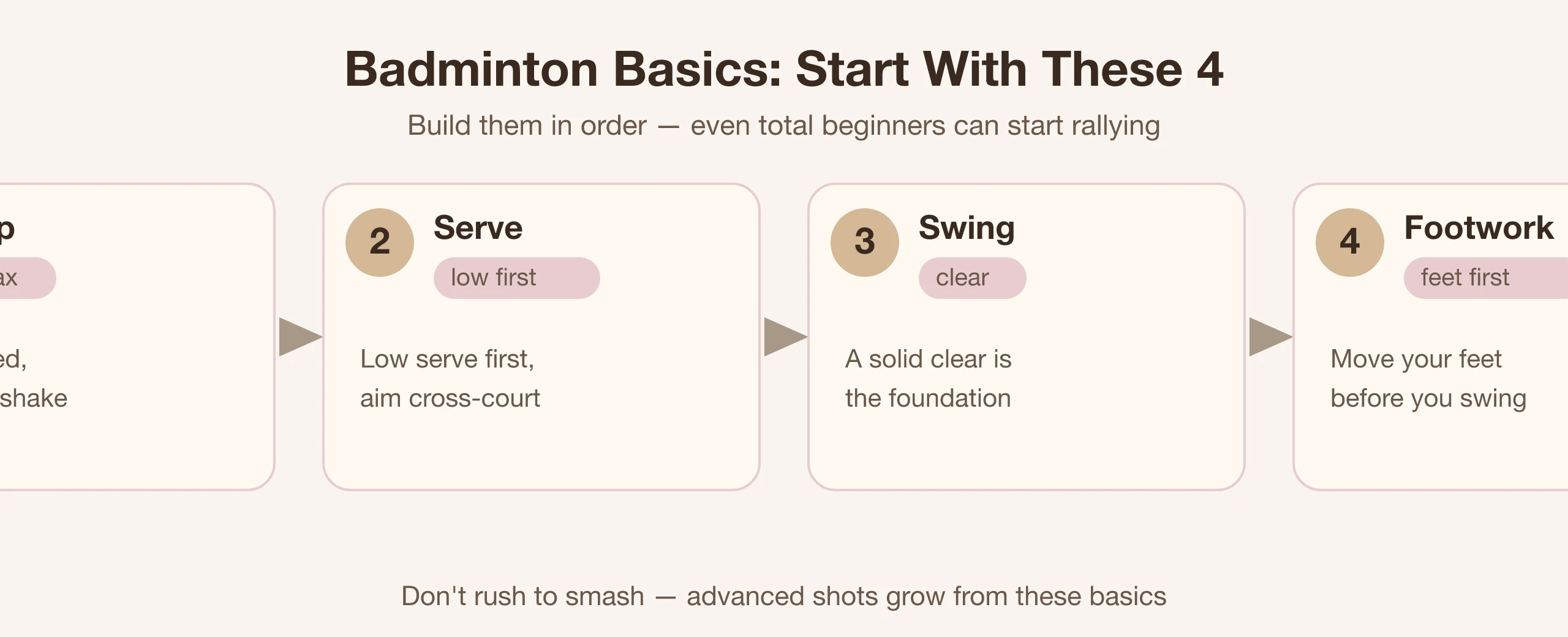
A common beginner mistake is rushing to learn the impressive smash before you can even return the shuttle reliably. We suggest building your foundation in this order:
- Grip: get the grip right and every shot that follows flows better.
- Serve: the underhand serve is the easiest to pick up, and it starts every rally.
- Swing: get the "clear" solid first — it's the foundation of every advanced shot.
- Footwork: keeping up with the shuttle and standing in the right spot matters more than swinging hard.
1. Grip: forehand and backhand
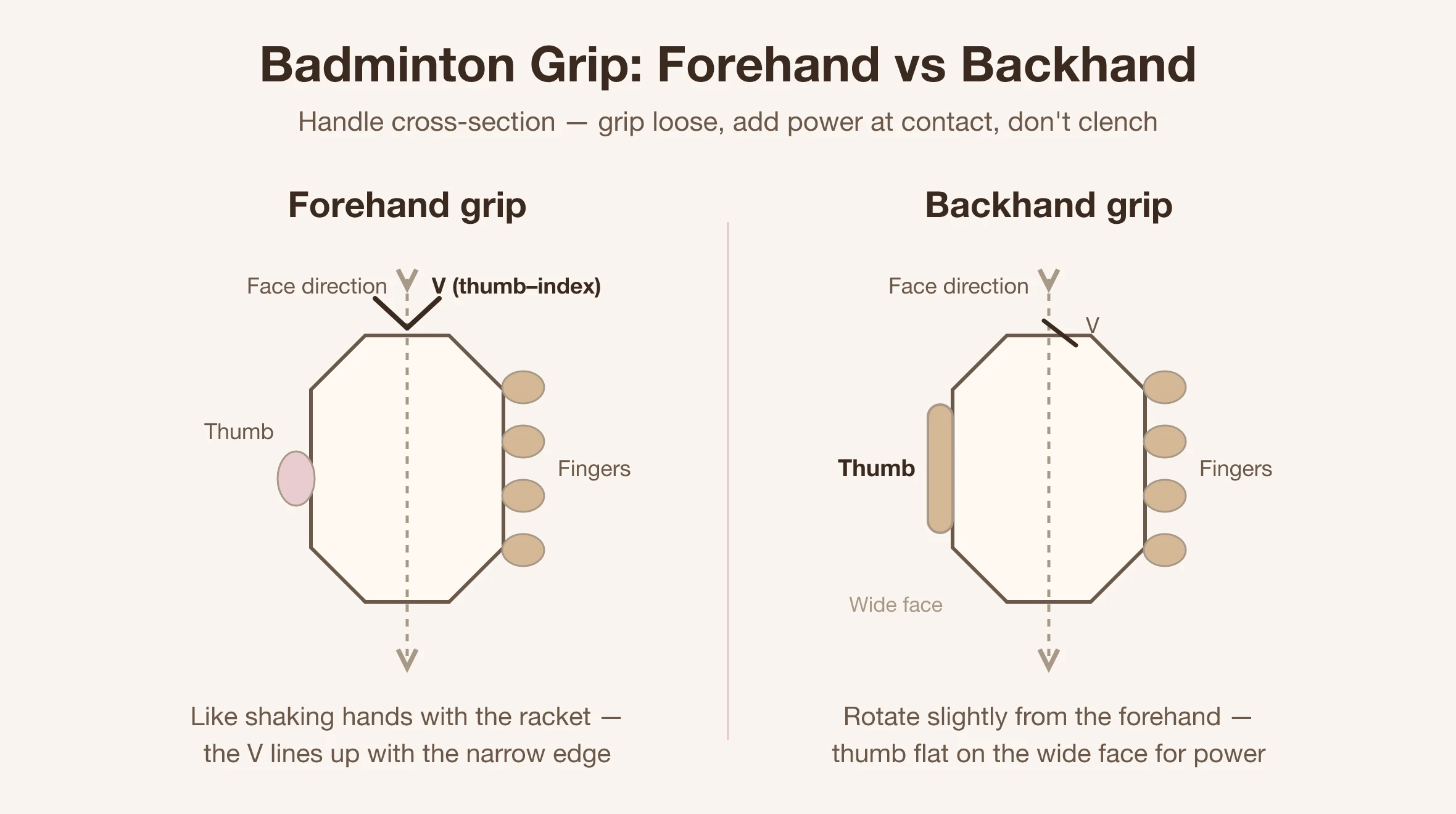
- Forehand grip: hold the racket loosely, like giving it a "handshake", with the V (thumb-index web) aligned to the narrower side of the handle and your fingers naturally relaxed — don't death-grip it. Most shots on your forehand side use this grip.
- Backhand grip: from the forehand grip, press your thumb onto the wider face of the handle to handle shots on your backhand side.
The most common grip mistake is holding too tight. Grip loosely and only apply force at the moment of contact — your wrist stays flexible and you're less likely to get injured.
2. Serve: start with the underhand serve
Beginners should start with the underhand serve (forehand or backhand both work):
- Hit the shuttle below the waist, racket head pointing down.
- Serve into the diagonally opposite service court.
- A backhand short serve (dropped near the opponent's front service line) is very handy in doubles — small motion, stable.
To understand serve position and rules (right for even, left for odd, serving diagonally), see Badminton Rules Explained.
3. Swing: get the clear solid
The clear (hitting the shuttle high from your back court to your opponent's back court) is badminton's most important fundamental:
- Turn sideways, non-racket hand pointing at the incoming shuttle.
- Lead with the elbow, whip from back to front, with the contact point high and in front of your head.
- Snap the wrist at the moment of contact, then follow through naturally.
Get the clear solid and your drops and smashes are all just variations of this same motion.
4. Footwork: keeping up matters more than the swing
Many beginners have "a great-looking swing but can never reach the shuttle". Badminton relies on footwork to get close to the shuttle and hit it from the best position:
- Ready with a "split step", bouncing slightly, weight on the balls of your feet.
- Move with "chassé / crossover steps" into position, then take a big last step and steady yourself before hitting.
- After the shot, return to the centre of the court and get ready for the next one.
Remember the mantra: move your feet first, then swing.
Badminton warm-up: always do it before you play
Badminton is all sudden stops and starts, so jumping straight on court is the easiest way to pull a muscle. Spend 5–10 minutes on a badminton warm-up before you start:
- Wrist, shoulder and ankle circles.
- Dynamic stretches like lunges and side steps.
- Rally gently for a few shots before gradually ramping up the intensity.
How to choose beginner gear
You don't need to buy expensive from the start, but these three are worth having:
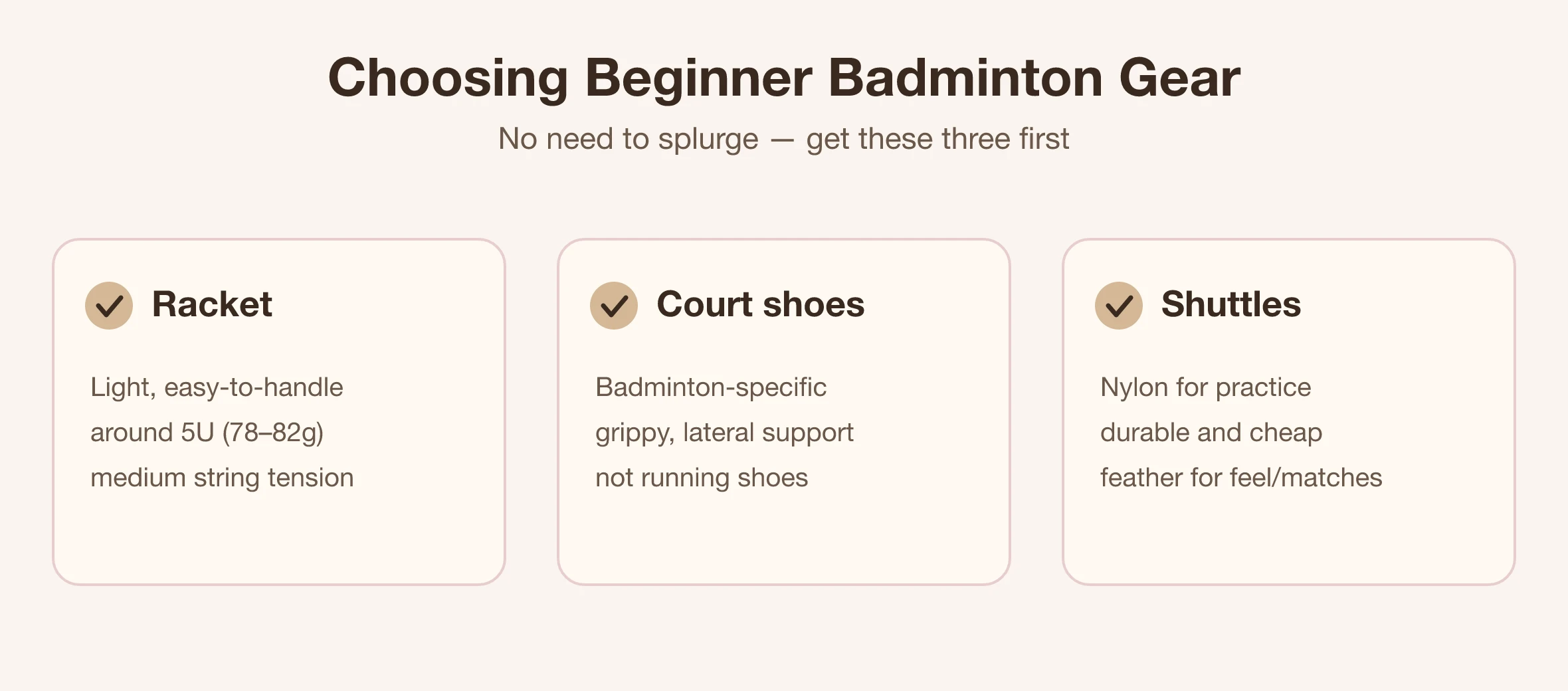
- Racket: as a beginner, an entry-level racket that's light with a flexible frame is enough, around 5U (78–82g) for easy control. Don't chase a high string tension yet.
- Court shoes: always wear dedicated badminton court shoes (grippy, with support for lateral movement) — regular running shoes slip easily and cause sprains.
- Shuttles: nylon shuttles are durable and cheap for practice; switch to feather shuttles for matches or when you want better feel.
The fastest way to improve: a hitting partner or lessons
You can watch endless tutorial videos, but nothing beats actually playing. A beginner's biggest hurdle is "no one of a similar level to practise with, and no one to correct their form". The two most effective options here:
- Get a hitting partner (coach): someone to feed you shuttles, rally with you and correct your grip and footwork on the spot — far faster than flailing away alone. What is a hitting partner? See What Is a Badminton Hitting Partner? Coaches, Cost & Who It's For.
- Take a private (1-on-1) or small-group lesson: build your fundamentals systematically.
- Join a pickup session: no need to round up three other players — sign up alone for a pickup session and you'll be grouped on arrival. Prefer to organise your own game? Live court availability for Taipei & New Taipei shows which venues still have open slots.
If your company or club wants to start out together, you can also run a group badminton session, with a coach leading a basic lesson before you rally together. Made Studio arranges badminton hitting partners, lessons and fun games for companies and groups — see Corporate & Team Building activities.
Frequently Asked Questions
I've never played badminton — what should I learn first?
Learn the grip and underhand serve first, then practise the clear and basic footwork. With these four fundamentals in place you can rally with friends — no need to learn the smash right away.
Do you need to grip a badminton racket tightly?
No — you should actually grip loosely. Gripping too tight stiffens your wrist and risks injury; just apply force at the moment of contact.
How do beginners choose a badminton racket?
Pick a light, easy-to-control entry-level racket (around 5U, 78–82g) with a flexible frame, strung at medium tension — no need to buy a high-end racket from the start.
Do you have to wear court shoes for badminton?
Strongly recommended. Badminton involves lots of sudden stops and lateral movement; dedicated court shoes grip well and support you, while regular running shoes slip easily and cause sprains.
Is it faster to learn from videos or with a hitting partner?
A hitting partner or lessons are clearly faster. Having someone feed you shuttles and correct your grip and footwork on the spot saves you a lot of wasted effort.
Looking for someone to practise with?
Whether you want a hitting partner, a badminton lesson, or to run a beginner-friendly badminton event for your company or club, tell us your needs on LINE and we'll handle the arrangements and a quote.
Enquire on LINE about badminton hitting partners, lessons & group activities →
Related reading
- Badminton Rules Explained: Scoring, Serving & Singles vs Doubles
- Live court availability, Taipei & New Taipei
- Pickup sessions: the schedule you can join on your own
- What Is a Badminton Hitting Partner? Coaches, Cost & Who It's For
- Fun Badminton Game Ideas: How to Run a Corporate Badminton Team-Building Event
- Corporate badminton booking & quote page
- Corporate & Team Building Activities